Thursday, June 4, 2009

diet weight loss tips

1. Add just one fruit or veggie serving daily. Get comfortable with that, then add an extra serving until you reach 8 to 10 a day.

2. Eat at least two servings of a fruit or veggie at every meal.

3. Resolve never to supersize your food portions—unless you want to supersize your clothes.

4. Make eating purposeful, not mindless. Whenever you put food in your mouth, peel it, unwrap it, plate it, and sit. Engage all of the senses in the pleasure of nourishing your body.

5. Start eating a big breakfast. It helps you eat fewer total calories throughout the day.

6. Make sure your plate is half veggies and/or fruit at both lunch and dinner.

Are there Any Easy Tricks to Help Me Cut Calories?

cut calories diet weight loss

7. Eating out? Halve it, and bag the rest. A typical restaurant entree has 1,000 to 2,000 calories, not even counting the bread, appetizer, beverage, and dessert.

8. When dining out, make it automatic: Order one dessert to share.

9. Use a salad plate instead of a dinner plate.

10. See what you eat. Plate your food instead of eating out of the jar or bag.

11. Eat the low-cal items on your plate first, then graduate. Start with salads, veggies, and broth soups, and eat meats and starches last. By the time you get to them, you’ll be full enough to be content with smaller portions of the high-calorie choices.

12.
Instead of whole milk, switch to 1 percent. If you drink one 8-oz glass a day, you’ll lose 5 lb in a year.

13. Juice has as many calories, ounce for ounce, as soda. Set a limit of one 8-oz glass of fruit juice a day.

14. Get calories from foods you chew, not beverages. Have fresh fruit instead of fruit juice.

15. Keep a food journal. It really works wonders.

16. Follow the Chinese saying: “Eat until you are eight-tenths full.”

17. Use mustard instead of mayo.

18. Eat more soup. The noncreamy ones are filling but low-cal.

19. Cut back on or cut out caloric drinks such as soda, sweet tea, lemonade, etc. People have lost weight by making just this one change. If you have a 20-oz bottle of Coca-Cola every day, switch to Diet Coke. You should lose 25 lb in a year.

20. Take your lunch to work.

21. Sit when you eat.

22. Dilute juice with water.

23. Have mostly veggies for lunch.

24. Eat at home.

25. Limit alcohol to weekends.

How Can I Eat More Veggies?

fruits weight loss diets

26. Have a V8 or tomato juice instead of a Diet Coke at 3 pm.

27. Doctor your veggies to make them delicious: Dribble maple syrup over carrots, and sprinkle chopped nuts on green beans.

28. Mix three different cans of beans and some diet Italian dressing. Eat this three-bean salad all week.

29. Don’t forget that vegetable soup counts as a vegetable.

30. Rediscover the sweet potato.

31. Use prebagged baby spinach everywhere: as “lettuce” in sandwiches, heated in soups, wilted in hot pasta, and added to salads.

32. Spend the extra few dollars to buy vegetables that are already washed and cut up.

33. Really hate veggies? Relax. If you love fruits, eat plenty of them; they are just as healthy (especially colorful ones such as oranges, mangoes, and melons).

34. Keep seven bags of your favorite frozen vegetables on hand. Mix any combination, microwave, and top with your favorite low-fat dressing. Enjoy 3 to 4 cups a day. Makes a great quick dinner.

Can You Give Me a Mantra that will Help Me Stick to My Diet?

help stick to my diet

35. “The best portion of high-calorie foods is the smallest one. The best portion of vegetables is the largest one. Period.”

36. “I’ll ride the wave. My cravings will disappear after 10 minutes if I turn my attention elsewhere.”

37. “I want to be around to see my grandchildren, so I can forgo a cookie now.”

38. “I am a work in progress.”

39. “It’s more stressful to continue being fat than to stop overeating.”

I Eat Healthy, but I’m Overweight. What Mistakes Could I Be Making without Realizing It?

diet mistakes

40. Skipping meals. Many healthy eaters “diet by day and binge by night.”

41. Don’t “graze” yourself fat. You can easily munch 600 calories of pretzels or cereal without realizing it.

42. Eating pasta like crazy. A serving of pasta is 1 cup, but some people routinely eat 4 cups.43. Eating supersize bagels of 400 to 500 calories for snacks.

44. Ignoring “Serving Size” on the Nutrition Facts panel.

45. Snacking on bowls of nuts. Nuts are healthy but dense with calories. Put those bowls away, and use nuts as a garnish instead of a snack.

46. Thinking all energy bars and fruit smoothies are low-cal.

What Can I Eat for a Healthy Low-Cal Dinner if I Don’t Want to Cook?

low calorie drinks meals tips

47. A smoothie made with fat-free milk, frozen fruit, and wheat germ.

48. The smallest fast-food burger (with mustard and ketchup, not mayo) and a no-cal beverage. Then at home, have an apple or baby carrots.

49. A peanut butter sandwich on whole wheat bread with a glass of 1 percent milk and an apple.

50. Precooked chicken strips and microwaved frozen broccoli topped with Parmesan cheese.

51. A healthy frozen entree with a salad and a glass of 1 percent milk.

52. Scramble eggs in a nonstick skillet. Pop some asparagus in the microwave, and add whole wheat toast. If your cholesterol levels are normal, you can have seven eggs a week!

53. A bag of frozen vegetables heated in the microwave, topped with 2 tablespoons of Parmesan cheese and 2 tablespoons of chopped nuts.

54. Prebagged salad topped with canned tuna, grape tomatoes, shredded reduced-fat cheese, and low-cal Italian dressing.

55. Keep lean sandwich fixings on hand: whole wheat bread, sliced turkey, reduced-fat cheese, tomatoes, mustard with horseradish.

56. Heat up a can of good soup.

57. Cereal, fruit, and fat-free milk makes a good meal anytime.

58. Try a veggie sandwich from Subway.

59. Precut fruit for a salad and add yogurt.

What’s Your Best Advice for Avoiding those Extra Holiday Pounds?

holiday weight gain

60. Don’t tell yourself, “It’s okay, it’s the holidays.” That opens the door to 6 weeks of splurging.

61. Remember, EAT before you meet. Have this small meal before you go to any parties: a hardboiled Egg, Apple, and a Thirst quencher (water, seltzer, diet soda, tea).

62. As obvious as it sounds, don’t stand near the food at parties. Make the effort, and you’ll find you eat less.

63. At a buffet? Eating a little of everything guarantees high calories. Decide on three or four things, only one of which is high in calories. Save that for last so there’s less chance of overeating.

64.
For the duration of the holidays, wear your snuggest clothes that don’t allow much room for expansion. Wearing sweats is out until January.

65. Give it away! After company leaves, give away leftover food to neighbors, doormen, or delivery people, or take it to work the next day.

66. Walk around the mall three times before you start shopping.

67. Make exercise a nonnegotiable priority.

68. Dance to music with your family in your home. One dietitian reported that when she asks her patients to do this, initially they just smile, but once they’ve done it, they say it is one of the easiest ways to involve the whole family in exercise.

How Can I Control a Raging Sweet Tooth?

sweet tooth

69. Once in a while, have a lean, mean salad for lunch or dinner, and save the meal’s calories for a full dessert.

70. Are you the kind of person who does better if you make up your mind to do without sweets and just not have them around? Or are you going to do better if you have a limited amount of sweets every day? One RD reported that most of her clients pick the latter and find they can avoid bingeing after a few days.

71. If your family thinks they need a very sweet treat every night, try to strike a balance between offering healthy choices but allowing them some “free will.” Compromise with low-fat ice cream and fruit, or sometimes just fruit with a dollop of whipped cream.

72. Try 2 weeks without sweets. It’s amazing how your cravings vanish.

73. Eat more fruit. A person who gets enough fruit in his diet doesn’t have a raging sweet tooth.

74. Eat your sweets, just eat them smart! Carve out about 150 calories per day for your favorite sweet. That amounts to about an ounce of chocolate, half a modest slice of cake, or 1/2 cup of regular ice cream.

75. Try these smart little sweets: sugar-free hot cocoa, frozen red grapes, fudgsicles, sugar-free gum, Nutri-Grain chocolate fudge twists, Tootsie Rolls, and hard candy.

How Can I Conquer My Downfall: Bingeing at Night?

eating late at night

76. Eat breakfast, lunch, and dinner. The large majority of people who struggle with night eating are those who skip meals or don’t eat balanced meals during the day. This is a major setup for overeating at night.

77. Eat your evening meal in the kitchen or dining room, sitting down at the table.

78. Drink cold unsweetened raspberry tea. It tastes great and keeps your mouth busy.

79. Change your nighttime schedule. It will take effort, but it will pay off. You need something that will occupy your mind and hands.

80. If you’re eating at night due to emotions, you need to focus on getting in touch with what’s going on and taking care of yourself in a way that really works. Find a nonfood method of coping with your stress.

81. Put a sign on the kitchen and refrigerator doors: “Closed after Dinner.”

82. Brush your teeth right after dinner to remind you: No more food.

83. Eat without engaging in any other simultaneous activity. No reading, watching TV, or sitting at the computer.

84. Eating late at night won’t itself cause weight gain. It’s how many calories—not when you eat them—that counts.

How Can I Reap Added Health Benefits from My Dieting?

health benefits

85. Fat-free isn’t always your best bet. Research has found that none of the lycopene or alpha- or beta-carotene that fight cancer and heart disease is absorbed from salads with fat-free dressing. Only slightly more is absorbed with reduced-fat dressing; the most is absorbed with full-fat dressing. But remember, use your dressing in moderate amounts.

86. Skipping breakfast will leave you tired and craving naughty foods by midmorning. To fill up healthfully and tastefully, try this sweet, fruity breakfast full of antioxidants. In a blender, process 1 c nonfat plain or vanilla yogurt, 1 1/3 c frozen strawberries (no added sugar), 1 peeled kiwi, and 1 peeled banana. Pulse until mixture is milkshake consistency. Makes one 2-cup serving; 348 calories and 1.5 fat grams.

87. If you’re famished by 4 p.m. and have no alternative but an office vending machine, reach for the nuts—. The same goes if your only choices are what’s available in the hotel minibar.

88. Next time you’re feeling wiped out in late afternoon, forgo that cup of coffee and reach for a cup of yogurt instead. The combination of protein, carbohydrate, and fat in an 8-ounce serving of low-fat yogurt will give you a sense of fullness and well-being that coffee can’t match, as well as some vital nutrients. If you haven’t eaten in 3 to 4 hours, your blood glucose levels are probably dropping, so eating a small amount of nutrient-rich food will give your brain and your body a boost.

89. Making just a few changes to your pantry shelves can get you a lot closer to your weight loss goals. Here’s what to do: If you use corn and peanut oil, replace it with olive oil. Same goes for breads—go for whole wheat. Trade in those fatty cold cuts like salami and bologna and replace them canned tuna, sliced turkey breast, and lean roast beef. Change from drinking whole milk to fat-free milk or low-fat soy milk. This is hard for a lot of people so try transitioning down to 2 percent and then 1 percent before you go fat-free.

90. Nothing’s less appetizing than a crisper drawer full of mushy vegetables. Frozen vegetables store much better, plus they may have greater nutritional value than fresh. Food suppliers typically freeze veggies just a few hours after harvest, locking in the nutrients. Fresh veggies, on the other hand, often spend days in the back of a truck before they reach your supermarket.

91. Worried about the trans-fat content in your peanut butter? Good news: In a test done on Skippy, JIF, Peter Pan, and a supermarket brand, the levels of trans fats per 2-tablespoon serving were far lower than 0.5 gram—low enough that under proposed laws, the brands can legally claim zero trans fats on the label. They also contained only 1 gram more sugar than natural brands—not a significant difference.

Eating Less Isn’t Enough—What Exercising Tips Will Help Me Shed Pounds?

Exercising Tips

92. Overeating is not the result of exercise. Vigorous exercise won’t stimulate you to overeat. It’s just the opposite. Exercise at any level helps curb your appetite immediately following the workout.

93. When you’re exercising, you shouldn’t wait for thirst to strike before you take a drink. By the time you feel thirsty, you’re already dehydrated. Try this: Drink at least 16 ounces of water, sports drinks, or juices two hours before you exercise. Then drink 8 ounces an hour before and another 4 to 8 ounces every 15 to 20 minutes during your workout. Finish with at least 16 ounces after you’re done exercising.

94. Tune in to an audio book while you walk. It’ll keep you going longer and looking forward to the next walk—and the next chapter! Check your local library for a great selection. Look for a whodunit; you might walk so far you’ll need to take a cab home!

95. Think yoga’s too serene to burn calories? Think again. You can burn 250 to 350 calories during an hour-long class (that’s as much as you’d burn from an hour of walking)! Plus, you’ll improve muscle strength, flexibility, and endurance.

96. Drinking too few can hamper your weight loss efforts. That’s because dehydration can slow your metabolism by 3 percent, or about 45 fewer calories burned a day, which in a year could mean weighing 5 pounds more. The key to water isn’t how much you drink, it’s how frequently you drink it. Small amounts sipped often work better than 8 ounces gulped down at once.

How Can I Manage My Emotional Eating and Get the Support I Need?

weight loss support

97. A registered dietitian (RD) can help you find healthy ways to manage your weight with food. To find one in your area who consults with private clients check out the ads at the top of the page, ask your friends or consult your yellow pages

98. The best place to drop pounds may be your own house of worship. Researchers set up healthy eating and exercise programs in 16 Baltimore churches. More than 500 women participated and after a year the most successful lost an average of 20 lb. Weight loss programs based on faith are so successful because there’s a built-in community component that people can feel comfortable with.

99. Here’s another reason to keep level-headed all the time: Pennsylvania State University research has found that women less able to cope with stress—shown by blood pressure and heart rate elevations—ate twice as many fatty snacks as stress-resistant women did, even after the stress stopped (in this case, 25 minutes of periodic jackhammer-level noise and an unsolvable maze).

100. Sitting at a computer may help you slim down. When researchers at Brown University School of Medicine put 92 people on online weight loss programs for a year, those who received weekly e-mail counseling shed 5 1/2 more pounds than those who got none. Counselors provided weekly feedback on diet and exercise logs, answered questions, and cheered them on. Most major online diet programs offer many of these features

from mytorontoweightloss

Monday, May 18, 2009

Rich and Famous Food

The world of the rich and famous is fascinating for many of us. They lead the life many of us want and they do what we only dream of us. Being a food fanatic, this time we’ll have a look at the most expensive foods in the world, most expensive drinks, deserts or spices.
joinGroup
1. Saffron, a spice grown worldwide, is derived from the saffron crocus flower. A pound of dry saffron (0.45 kg) requires 50,000–75,000 flowers to make, meaning an entire football field of these flowers. Requiring so much resources and labor, prices for the spice go around US$500/pound to US$5,000/pound (US$1100–US$11,000 per kilogram).
joinGroup


2. The most expensive nut in the world is the Macadamia nut. The macadamia tree produces nuts only after it’s 7-10 years old, requiring fertile soil and heavy rainfall. These nuts have a very hard seed, but once it’s open it reveals a creamy white kernel containing up to 80% oil and 4% sugar. The cost of a kilogram of these nuts exceeds 30$.
joinGroup


3. The most expensive caviar in the world is not the black one, but the almas caviar! The word ‘almas’ is Iranian for diamond. Beluga caviar comes from a fish over 100 years old, that is virtually unchanged for 120 million years. The luxurious caviar comes from the oldest survivor of the Dinosaur era. Beluga caviar ranges in price from more than $5,000 per kilogram in the United States

joinGroup
4. The most expensive mushroom in the world is the white truffle. The mushroom has its origins in the Langhe area of the Piedmont region in northern Italy, it can reach 12 cm diameter and 500g. These truffles are sold at a amazing price of €2,000 and €4,000 per kilogram ($1350 - $2700 per pound). The record price for this truffle was paid last year, in December, when Stanley Ho, the owner of the Macau casino paid $330,000 for 1.5kg of truffles.

joinGroup
5. The most expensive potato in the world is a French one, “La Bonnotte�. Annually, only 100 tons of this top quality potato are cultivated and collected only on the island Noirmoutier. The potato fields require to be fertilized only with seaweed in a climate shaped by the nearby sea. The cost of one single kilogram can reach €500 since this type of potato is almost extinct.


joinGroup
6. The most expensive beef in the world is the type of beef coming from the Wagyu cows. These Japanese cows are fed the best grass and provided the best treatment. That is why the meat is especially tender and particularly expensive. 200 grams of a fillet cost in Europe more than 100 dollars.

joinGroup
7. The most expensive sandwich in the world is the club sandwich from Essen aka von Essen Platinum Club Sandwich. This triple-decker delicacy contains the finest chicken, ham, hard-boiled quails’ eggs and white truffles and it’s currently sold at Cliveden, Berkshire. The chicken (poulet de Bresse) is referred to as the ‘fourth gastronomic wonder of the world served with a topping of white truffles, sold at over a thousands ponds a month. At 1,182 calories, with 1.8oz of fat, it’s not the healthiest dish but certainly one of the most expensive. Costing 100 pounds (almost 200 dollars), this is a must-try for the food fanatics.

joinGroup
8.The most expensive pizza in the world, valued at 8300 Eur can be tasted in Italy. With generous toppings of caviar and lobster, the pizza has a diameter of 20cm and Louis XIII Remy Martin cognac poured all over it.

joinGroup
9. The most expensive omelet in the world can be tasted at the Le Parker Meridien restaurant in New York. The $1,000 omelet consists of 10 ounces of sevruga caviar, a whole lobster, and six eggs. To make it in the privacy of your own home, the cost will be only $700.

joinGroup
10. Off to something sweet now with one of the most expensive deserts in the world, served at Serendipity 3, a popular restaurant in the Upper East Side of Manhattan. The $1000 sundae was introduced in 2004 and was listed in the Guinness Book of World Records as the most expensive dessert. It’s made up of 5 scoops of the richest Tahitian vanilla bean ice cream, Madagascar vanilla, 23K edible gold leaf and one of the most expensive chocolates in the world, Amedei Porceleana.


Friday, May 15, 2009

9 Reproductive Problems You Can Prevent

Men's Health

We men are a little uncomfortable with our genitals. Girls rock skirts sans undies (thanks, Britney), but most guys wouldn't dare don a kilt. R-rated movies showcase female pink parts, but they cover Borat's junk with a black rectangle. And while women have an entire area of medicine dedicated to the health of their private regions, if it wasn't for the hernia check, we men would hardly drop trou at the doctor's office.

The result? When it comes to caring for some of our most critical equipment—the stuff we need to, you know, keep our species going—we're virtually clueless. And that ain't good, because a lot can happen to a man's penis, testicles, and prostate: itchiness, infection, pain, bumps, sores, growths, rashes, burning, drooping, swelling, clogging, and, hell, cancer. If you're not paying attention, you can wind up sick, sterile, or dead. With a little knowledge, though, you can cut much of the bad stuff off at the pass.

Start here. These nine scenarios may make you wince, but at least you'll know what to do if they happen to you.

Agonizing pain in your scrotum

The cause: Assuming you weren't just kicked there, one of your testicles is probably twisted around something called the spermatic cord, cutting off the blood supply. "Think of a ball hanging on a rope," says Tony Makhlouf, M.D., Ph.D., a urologic surgeon at the University of Minnesota medical center. "As the rope turns, it bunches, and the ball rises." This knotting—testicular torsion, it's called—instantly causes a sharp pain.

The cure: Head to an ER. "If it isn't treated within four hours, you can lose a testicle," warns Larry Lipshultz, M.D., a professor of urology at Baylor College of Medicine. "Why take a chance?" The docs at the E.R. will do an ultrasound to assess whether your testicle and cord are indeed twisted. If that's the case, a urologic surgeon will be called to untangle things. Then he'll suture each testicle to the inside of your scrotum to prevent the torsion from happening again.

Agonizing pain in your guys

The cause: The coiled tube that carries sperm from your testicles has probably become inflamed due to a bacterial infection. The most common culprits are gonorrhea, chlamydia, and, in men over 40, a urinary-tract infection that migrated. The testicles themselves can also become inflamed.

The cure: Don't just pop some Advil and try to tough it out. "If you don't treat it, the tubes can become scarred and blocked," says Dr. Makhlouf. "You could become infertile." So see your doctor, who will probably prescribe at least two weeks on an oral antibiotic to tackle the bacteria. Swelling and pain should begin to lessen within three days, but it could take months for all symptoms to subside.

Pain when you pee or ejaculate

The cause: Chronic pelvic pain syndrome, usually resulting from an inflamed prostate gland. "It's a collection of symptoms that originates from an injury, often an infection, and the problems come from how the body responds to that infection," says Daniel Shoskes, M.D., a Cleveland Clinic urologist.

The cure: Two-thirds of men will get better with antibiotics in the early stages. For those whose inflammation persists beyond initial infection, Dr. Shoskes prescribes herbal-based bioflavonoid preparations, such as Prosta-Q and Q-Urol, which reduce inflammation. Flomax and other prescription agents that block an important receptor in the region also reduce pain and can improve urinary flow. Still other men suffer from nerve and muscle spasms, requiring muscle relaxants and physical therapy.

See a urologist in any case, but you can help your own cause by taking hot baths; by avoiding alcohol, spicy foods, and caffeine; and by using a doughnut-shaped cushion when sitting for long periods of time.

Your goodies look droopy

The cause: Sometimes the valves inside the veins of the scrotum don't close properly, so blood pools and they swell. The resulting bundle of enlarged veins, or varicoceles, doesn't always hurt, but the extra blood warms the testes. This jeopardizes sperm production (which requires temps cooler than 98.6°F) and causes the testicles to hang away from the body. About 20 percent of men will experience a varicocele at some point.

The cure: "If you notice you have low-hanging fruit, see a urologist who specializes in infertility," says Harry Fisch, M.D., director of the male reproductive center at New York Presbyterian Hospital and author of The Male Biological Clock. He or she can stop blood from pooling by tying off the veins or blocking them. It's minor outpatient surgery and you can have sex again in three weeks, although you should schedule a follow-up semen analysis in three to four months. In 60 percent of infertile men, semen quality will improve after surgery, says Dr. Fisch.

Even if you're not trying to conceive, he adds, the problem should be corrected if it's painful or creates a size discrepancy between testicles.

Your semen is red and drips out

The cause: When infections begin to heal, scar tissue can form and create a blockage in the ejaculatory duct. "It's like a five-lane highway becoming a two-lane highway," says Dr. Fisch. The red tint is blood from the initial infection. Your ejaculate volume may drop below the average of half a tablespoon and continue to dribble like an NBA point guard after you achieve orgasm.

The cure: You can function with a dribbly ejaculate, but it's kind of a buzz kill. Fortunately, there's a surgical solution. The formal term is "transurethral resection of the ejaculatory ducts," but it's simpler than it sounds. "We just scrape out the scar tissue, and that opens it all up," says Dr. Fisch. You can resume sexual activity in seven to 10 days.

It's hard to maintain an erection

The cause: According to the American Urological Association, about 25 percent of erectile-dysfunction cases are psychological, and it could be anything from relationship issues to performance anxiety. For example, a man may have a sexual experience after heavy drinking and fail to get it up. "In subsequent sexual attempts without alcohol, he'll remember that episode, think something's wrong with him, and be unable to perform," says Karen Boyle, M.D., director of reproductive medicine and surgery at the Johns Hopkins Brady Urological Institute.

The cure: Once physical factors have been ruled out, try seducing her after a romantic breakfast. Your testosterone levels peak around 7 a.m., so your hormones, and your penis, will be at full attention then. In many cases, such as the aforementioned alcohol scenario, a pharmaceutical option can also offer a helping hand. "A little added self-confidence—such as receiving some extra 'lift' from Viagra—goes a long way in this arena," says Andrew McCullough, M.D., director of sexual health and male fertility at the New York University medical center. If all else fails, seek counseling to address the underlying psychological issues.

There's a red rash in your groin

The cause: If it's on your thighs, it's often tinea cruris (a.k.a. jock itch), a fungus that thrives in warm, moist environments like, say, gym shorts that haven't been washed since the Clinton administration. If it's bright red and right on the penis, it may be a yeast infection, which can be passed from women to men through unprotected sex.

The cure: Preventionwise, shed damp gym clothes and shower immediately after exercising, and dry the area thoroughly before dressing. For treatment, an over-the-counter medication like Lotrimin can work wonders. "Continue using it for one to two weeks after the rash is gone to really knock it out and prevent it from coming back," says dermatologist Peter Kopelson, M.D., of the Kopelson Clinic, in Beverly Hills. For a yeast infection, try an over-the-counter antifungal cream, applying twice daily for a week.

Don't treat either condition with hydrocortisone cream. By suppressing your immune system, "hydrocortisone will actually make the fungus worse," says Dr. Kopelson.

You think you have an STD

The causes: Have cauliflower-shaped growths on your penis, a watery drip from your penis, painful blisters on your genitals, a thick yellow drip at times, reddish chancre sores on your genitals, and raised bumps on your groin? You have, in order, genital HPV, chlamydia, genital herpes, gonorrhea, syphilis, and molluscum. You haven't been wearing a condom, have you?

The cures: We're not here to lecture you on STDs, but there are a few new things you should know. First, the FDA is reviewing the efficacy of a genital-HPV vaccine, Gardasil, for men. Currently, guys can get the three-shot treatment for a little over $300, says Stephen Tyring, M.D., Ph.D., medical director of the Center for Clinical Studies, in Houston. His research team helped secure approval for the female version of the vaccine.

Second, according to a CDC study, 8.2 percent of men between the ages of 16 and 24 are infected with chlamydia, but only 2.4 percent of those men have symptoms. And research by the New York City department of health and mental hygiene found that one in eight women treated for chlamydia were reinfected within a year. The point? If your girlfriend has had chlamydia, you should be screened and treated to avoid possibly reinfecting her.

Third, "Molluscum [a viral infection] is the newest scourge we are seeing on campus," says Joel Schlessinger, M.D., president of the American Society of Cosmetic Dermatology and Aesthetic Surgery. "The [raised bumps are] very contagious, and although they carry little or no risk, they can be a nuisance and require several treatments to fully eradicate." Keep one eye open, college boy.

There's a bulge in your groin

The cause: You should have hired movers to lift that fridge. Inguinal hernias occur when part of the intestine protrudes through a congenitally weak abdominal wall. "It's often associated with a major straining episode," says Dr. Fisch, but a simple sneeze can set it off.

The cure: If it's small and doesn't bother you, no action may be needed. If it's growing or painful, lying down with your pelvis higher than your head can reduce the discomfort, but ultimately you'll need surgery. This will come in the form of either a herniorrhaphy, in which the edges of healthy tissue are sewn together, or the more modern hernioplasty, in which a piece of synthetic mesh is laparascopically inserted to cover the entire inguinal area. (A surgeon will recommend the option best suited to repair your particular type of abdominal-wall tear.) You'll be back to work within a few days.

1 Dumbbell, 650 Muscles

1 Dumbbell, 650 Muscles
It's the simplest total-body workout ever.

Editors of Men's Health

Here's a new approach for the new year: Use one dumbbell instead of two. By not tracking reps in this fast routine, you'll focus on form and trigger more muscle fibers, says creator C. J. Murphy, co-owner of Total Performance Sports in Everett, Mass. Complete the circuit by doing each exercise for 45 seconds. Rest one minute. Repeat two or three times.

Start with a 15-pound dumbbell. Add weight as you progress, but don't go so heavy that you need to rest between exercises.

1. Woodchopper

With arms nearly straight and feet just beyond shoulder-width apart, hold a dumbbell over your right shoulder. Bend your knees and forcefully rotate your torso left as you draw your arms down and across your body. When your hands go past your left ankle, reverse the motion. Then switch sides. Keep your abs tight to prevent injury.

2. Arms-Out Squat

Standing with your feet slightly wider than shoulder-width apart, grasp a dumbbell by the ends and hold it straight out from your eyes. Now try to press the ends together as you simultaneously push your hips back, bend your knees, and lower your body until your thighs are parallel to the floor. Pause, and push back up.


3. Standing Pressout

With your feet shoulder-width apart, hold a dumbbell by its ends and next to your chest. Try to press the ends together as you simultaneously push the dumbbell away from your body and slightly up (to eye level) until your arms are straight. Pause, and pull the dumbbell back as you squeeze your shoulder blades together.

4. Towel Row

Secure a towel around a dumbbell's handle. Grab an end of the towel with each hand and stand with your feet shoulder-width apart, knees slightly bent. Bend at your hips, keep your lower back flat, and lower your torso until it's almost parallel to the floor. Pull the towel ends to either side of your abdomen. Pause and lower the towel.

Provided by Men's Health

Abs in No Time

Grab a medicine ball for an intensified crunch workout that will flatten your belly before beach season.
By the Editors of Men's Health

Get ripped fast

In these days of bogus infomercials, fat-burning concoctions, and fitness contraptions that promise incredible abs, there's something reassuring about a workout with a medicine ball. The heft of a vintage medicine ball makes us want to put on gray sweats and start heaving it around with the fellas, grunting contentedly. On the other hand, you can take the vintage thing too far. Leather is out; vinyl is in. Medicine balls now have easier-to-grab surfaces, and they come in many sizes and weights. (They still need a new name, though. Medicine?!)

What are you waiting for?

Here's a leave-me-alone, in-a-hurry, 21st-century set of exercises that uses the weight of a medicine ball to blast your belly from top to bottom, and your obliques on the sides—those all-important muscles you use when doing twisting, turning moves in sports. The workout was designed by Jacqueline Wagner, C.S.C.S., a strength coach in New York City. The added weight of the medicine ball will give you a more intense workout than you'll get with conventional crunches.

Use a ball that's light enough so you can do one set of each exercise without straining or arching your back. A good weight for ab workouts is a 4-kilogram medicine ball (just shy of 9 pounds). Start with one circuit and build up to three sets of the circuit. Use a slow, controlled movement for the Double Crunch and Reverse Crunch.

Double Crunch

Starting position: Lie on your back, with your hips and knees bent as shown and your feet off the floor. Rest your hands lightly on your chest. Position the ball between your knees.

The move: Exhale as you lift your shoulders off the floor and bring your knees toward your chest. Grab the ball with your hands and bring it to your chest as you inhale and ...

The finish: Return your shoulders and legs to the starting position. Transfer the ball back to your legs on the next repetition, and keep alternating ball positions for the entire set.

Seated Twist

Starting position: Sit on the floor, your back straight but leaning slightly toward the floor, as if in the "up" position of a sit-up. Your knees should be bent 90 degrees, your heels about 15 inches apart and resting on the floor.

The move: Hold the ball close to your chest, rotate your torso to the left, and place the ball on the floor behind you. Rotate around to the right, pick up the ball, rotate left, and place it behind you.

The finish: Repeat eight to 12 times, then do eight to 12 more starting with a rotation to your right; that's one set.

Hint: Keep your head in line with your torso throughout the movement. Perform this move as quickly as possible.

Reverse Crunch with Knee Drops

Starting position: Lie on your back, hands resting on the floor at your sides, hips and knees bent 90 degrees, and feet off the floor. Position the ball between your knees. Keep your lower back on the floor throughout the exercise.

The move: Contract your abdominals and pull your knees to your chest, then return them to the starting position.

The finish: Lower your knees to the left and return to the starting position. Drop your knees to your right on the next repetition, and alternate sides for each rep.

Tuesday, May 12, 2009

5 Sleep Myths Busted

It accounts for a third of your life and a big chunk of your health and longevity. So why aren't you sleeping enough?

By Jim Gorman, Men's Health

What a night. The woman of your dreams appeared. Your pulse raced. Heavy breathing ensued. You do remember it, right? Oh, wait, you were asleep. And that's not all you missed. Under cover of night, sleep floods your veins with age-defying human growth hormone. Sleep raises an army of T cells and sends them into battle against colds and infection. Sleep resets the appetite controls that tell you to not hit the turn signal when you pass a McDonald's. And, of course, sleep helps you above the neck as well as below the belt.

"It stabilizes your waking brain, makes you more alert, and allows you to process information faster," says David Dinges, Ph.D., who studies shut-eye at the University of Pennsylvania. "It helps you remember things and consolidate those memories." You won't get that from a Red Bull. So then why are we engaged in a society-wide experiment in sleep deprivation? Average nightly sleep time during the workweek in the United States is down nearly 20 minutes in the last decade, to six hours and 40 minutes. And men ages 30 to 44 are the worst offenders: Thirty percent of them say they log less than six hours of sleep at night, according to a survey from the Centers for Disease Control and Prevention.

The price you pay for this sleep deficit is more than just lost productivity—your health can suffer too. So wake up! It's time to shed some light on this dark territory.

Successful, driven guys should be good to go on five hours a night: MYTH

True, Napoleon slept four to five hours a night, and Thomas Edison got by on four. But world domination and the lightbulb might have been mere warm-ups had these guys slept more. Sleep scientists estimate that only 10 percent of adults are hardwired to need appreciably less (or more) sleep than the recommended seven to eight hours. And by cheating on sleep, you're limping through life with the cranial equivalent of a torn calf muscle. Scarier still, people who are sleep-deprived often don't even know they've turned into zombies. After dividing 48 volunteers into four sleep regimens—eight, six, four and zero hours a night (a.k.a. torture)—University of Pennsylvania researchers found that the six-hours-a-night group fared as poorly on measures of alertness and memory after two weeks as the no-sleep crew did after 24 hours. But participants in the six-hour group didn't feel very sleepy even when they were performing at their worst. Accumulating a sleep deficit also leads to "microsleeps" while you're awake. "Your brain becomes unstable and will go 'off-line' for half a second," Dinges says. The more sleep-deprived you are, the more frequent and longer the lapses.

Snooze strategy: If you didn't sleep seven to eight hours every night this past week, go to bed this weekend at your regular weekday time, but don't set your alarm clock. Did you rise on Saturday and Sunday at the same time you would have on, say, a Tuesday? Then you may be one of those few people who can sleep less yet remain healthy. The rest of us mere mortals can begin to repay our sleep debt by dozing 10 hours a night on weekends and then sticking to seven to eight hours during the week. Your brain will use this strategy whenever you accumulate a sleep debt, says Ruth Benca, M.D., Ph.D., medical director of the Wisconsin Sleep Center. Otherwise, you want to stay consistent with your sleeping.

Frequently needing to pee in the middle of the night might indicate a health problem: TRUTH

That first stumble to the bathroom in the dark can be chalked up to the beer you drank watching the Knicks game. The second one can spell trouble. "If you habitually take two or more bathroom trips a night, you probably have obstructive sleep apnea," says Alex Chediak, M.D., medical director of the Miami Sleep Disorders Center. With sleep apnea, the soft tissue at the back of your throat blocks your upper airway during sleep, stopping your breathing for anywhere from 10 seconds to a minute or even longer. This can occur hundreds of times in a night, depriving you of restorative deep sleep and starving your vital organs of oxygen. No wonder sleep apnea has been linked to heart disease, hypertension, and mood disorders.

But why does it wake you up to pee? Because those mini-suffocations result in lower circulating oxygen levels, your heart pumps harder, raising your blood pressure. As excess fluid builds up in your veins, a feedback loop triggers the release of a pressure-relieving diuretic, making you need to pee. An enlarged prostate and high blood sugar can also prompt middle-of-the-night bowl breaks. But with those conditions, says Dr. Chediak, you'll pee a lot day and night.

Snooze strategy: Raising the pillow end of your bed by a few inches can help prevent that tissue from blocking your throat. Snoring could also be waking you in the middle of the night, and one major cause is nasal obstruction. Wash out mucus and irritants by mixing 1/4 teaspoon of table salt in 2 cups of warm water and flushing your nose twice a day using a medical or bulb syringe. Japanese researchers found that people with nasal obstruction were twice as likely to experience daytime fatigue as people with clear passageways. For video instruction on the technique, visit mayoclinic.com and search "nasal irrigation." If the peeing persists around the clock, schedule a prostate exam and have your blood-sugar level checked by your doctor after an overnight fast.

The post-lunch bonk can't be avoided: MYTH

Many Europeans scarf down a carb-loaded lunch and then shut down from 1 to 4 in the afternoon. But with unemployment soaring, let's assume a three-hour nap won't play well at the office. If you find yourself entering what amounts to a food coma after lunch, you're probably eating too many carbohydrates in the morning. And what you're not getting enough of is making it worse. "A postlunch crash is a telltale sign of poor nighttime sleep, as is dozing in meetings, theater performances, or similar environments," says Dr. Benca. Not sure if you're experiencing a modest dip or a true crash? Take a minute or two to fill out the Epworth Sleepiness Scale. This online questionnaire is the same one sleep docs use on their new patients.

Snooze strategy: Along with improving your nightly sleep pattern, eat three small meals spaced two hours apart in the morning. Try a protein shake at 7 a.m., two eggs and a small cup of oatmeal at 9, and an apple and a handful of almonds at 11. You'll consume fewer carbohydrates, and you won't be as likely to overeat at lunchtime. In fact, a salad with grilled chicken and avocado on top should be enough to keep your mind focused and your head off the desk all afternoon, says Keith Berkowitz, M. D., medical director of the Center for Balanced Health in New York City.

Waking up at 4 a. m. every day just means I'm an early riser: MYTH

More likely, you—along with 60 million other Americans—have insomnia, an inability to fall or stay asleep. "Insomniacs wake at the slightest disturbance and feel unrefreshed in the morning," says Dr. Benca. Insufficient sleep exposes the sufferer to a litany of performance and health problems. In a study published in the Journal of Psychosomatic Research, researchers found insomniacs were more than twice as likely as normal sleepers to call in sick for long periods.

Snooze strategy: Let's assume that you've already cut back on caffeine. What you want to do is make your sleep more efficient, says W. Christopher Winter, M.D., medical director of the sleep medicine center at Martha Jefferson Hospital in Charlottesville, Va. Dr. Winter likens poor sleep to a bookcase missing a few volumes, representing gaps in your sleep. By going to bed an hour or so later, those gaps won't be as long as or frequent. Soon enough, you should be waking up after the roosters, not before them.

A tiring workout before bed will help me sleep more soundly: MYTH

Regular exercise is one of the best sleep-promoting remedies, but working out late at night risks leaving you wide-eyed in bed. "It's easiest to fall asleep when your core body temperature goes relatively quickly from very warm to very cold," says Dr. Chediak. "After exercise, that cooling process takes four to six hours." It's better to take a hot bath or sauna session close to bedtime. "Anything that raises core body temperature will help get you started on sleep," says Dr. Chediak. He says the cooldown period into the sleep zone following a bath takes just two hours—half that of an exercise session.

Snooze strategy: Work out—but do it first thing in the morning for all-day energy and a quick drift into deep, restful sleep. Studies show that exercise improves sleep as effectively as a class of sleeping pills that includes Restoril and Halcion.

Alcohol can help me sleep at night: MYTH

Only if you equate a good night's sleep with passing out drunk on your girlfriend's sofa. Alcohol messes with the normal sleep cycle, especially the back end of the cycle. "Four hours into sleep, alcohol wears off and leaves you in an excitable state," says Dr. Chediak. You'll sleep lighter, wake more easily, and be hung over when you do wake. After three nights of intoxicated slumber, even the initial knockout punch begins to wane. Dr. Chediak warns of another drawback to using a six-pack as a sleep aid. "Being a muscle relaxant as well as sedative, alcohol can even create sleep apnea symptoms in snorers who don't otherwise have the condition," he says. Unfortunately, liquor is a go-to therapy for many sheep counters, used as often as over-the-counter sleeping pills and more often than prescription sleep meds.

Snooze strategy: Be consistent with your overall schedule and you won't need booze. "Your internal clock is a structure in your brain called the suprachiasmatic nucleus," says Dr. Winter. "To set this clock, eat your breakfast, lunch, and dinner at exactly the same time every day for a week."

Thursday, April 30, 2009

Swine Flu

Swine influenza virus (SIV) is caused by Orthomyxoviruses that are endemic to pig populations. SIV strains isolated to date have been classified either as Influenzavirus C or one of the various subtypes of the genus Influenzavirus A.

Swine flu, unlike bird flu, is able to pass from human to human contact. The 2009 swine flu outbreak is the spread of a new strain of H1N1 influenza virus that was first detected by public health agencies in March 2009. Local outbreaks of influenza-like illness were detected in three areas of Mexico, but the presence of this new strain was not discovered for a month.

Following this discovery in the parts of United States bordering Mexico, its presence was swiftly confirmed in the local outbreaks in Mexico, and in isolated cases elsewhere. By April 27, the new strain was confirmed also in Canada, Spain, and the United Kingdom and suspected in many other nations, with over 1,800 candidate cases.

The new strain is an apparent reassortment of several strains of influenza A virus subtype H1N1, including a strain endemic in humans and two strains endemic in pigs, as well as an avian influenza.

Reassortment is common in influenza viruses, due to the structure of their genome. This particular reassortment is consistent with a transmission of swine influenza from pig to human combined with the mixing of two viral infections in the same person.

In April both the World Health Organization (WHO) and the United States Centers for Disease Control and Prevention (CDC) expressed serious concerns about this novel strain, because it apparently transmits from human to human, has had a relatively high mortality rate in Mexico, and because it has the potential to become a flu pandemic.

On April 25, 2009, the WHO determined the situation to be a formal “public health emergency of international concern”, with knowledge lacking in regard to “the clinical features, epidemiology, and virology of reported cases and the appropriate responses”.

Government health agencies around the world also expressed concerns over the outbreak and are monitoring the situation closely.

Recommendations to prevent infection by the virus consist of the standard personal precautions against influenza. This includes frequent washing of hands with soap and water or with alcohol-based hand sanitizers, especially after being out in public. People should avoid touching their mouth, nose or eyes with their hands unless they've washed their hands. If people do cough, they should either cough into a tissue and throw it in the garbage immediately or, if they cough in their hand, they should wash their hands immediately.

Many countries confirmed that inbound international passengers will be screened. Typical airport health screening involves asking passengers which countries they have visited and checking whether they feel or look particularly unwell.

On April 27, the CDC recommended the use of Tamiflu and Relenza for both treatment and prevention of the new strain.

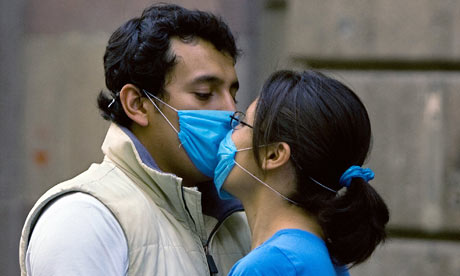
Some physicians in the US are recommending the use of masks when in public. The purpose of a face mask is to effectively cover a person’s mouth and nose so that if a person is around someone who is infected, there is a decreased likelihood of transmission.

joinGroup

Cases by country

Country

Laboratory confirmed cases

Other possible cases*

Attributed deaths‡

Refs.

Mexico (details)

26

1,995

149 (20)

[1][2]

United States (details)

48

212+

0

[3][2][4]

Canada (details)

6

28+

0

[2][5]

United Kingdom (details)

2

21

0

[6]

Spain (details)

1

35

0

[7][8]

New Zealand

0

56

0

[9]

Australia

0

19

0

[10][11]

Colombia

0

12

0

[12]

Brazil

0

11

0

[13][14]

Switzerland

0

5

0

[15]

Denmark

0

4

0

[16]

Ireland

0

4

0

[17]

Czech Republic

0

3

0

[18]

Poland

0

3

0

[19]

France

0

3

0

[20]

Guatemala

0

3

0

[21]

Israel

0

2

0

[22]

Argentina

0

1

0

[23]

Costa Rica

0

1

0

[24]

Peru

0

1

0

[25]

Russia

0

1

0

[26]

South Korea

0

1

0

[27]

Totals

83

2,443+

149 (20)


* Not all cases have been confirmed as being due to this strain. Possible cases are cases of influenza-like illness (ILI) that have not been confirmed through testing to be due to this strain.
‡ Deaths with confirmed presence of virus in parentheses.

joinGroup


Questions and answers about swine flu

Mexico is contending with an outbreak of swine flu, suspected in the deaths of dozens of people and sickening perhaps 1,000. In the United States, at least eight cases have been confirmed with the infection, all of them in California and Texas; only one person was hospitalized. Here are some questions and answers about the illness:


Q. What is swine flu?

A. Swine flu is a respiratory illness in pigs caused by a virus. The swine flu virus routinely causes outbreaks in pigs but doesn’t usually kill many of them.

Q. Can people get swine flu?

A. Swine flu viruses don’t usually infect humans. There have been occasional cases, usually among people who’ve had direct contact with infected pigs, such as farm workers. “We’ve seen swine influenza in humans over the past several years, and in most cases, it’s come from direct pig contact. This seems to be different,” said Dr. Arnold Monto, a flu expert with the University of Michigan.

Q. Can it spread among humans?

A. There have been cases of the virus spreading from human to human, probably in the same way as seasonal flu, through coughing and sneezing by infected people.

Q. What are the symptoms of swine flu?

A. The symptoms are similar to those of regular flu — fever, cough, fatigue, lack of appetite.

Q. Is the same swine flu virus making people sick in Mexico and the U.S.?

A. The Centers for Disease Control and Prevention said the Mexican virus samples match the U.S. virus. The virus is a mix of human virus, bird virus from North America and pig viruses from North America, Europe and Asia.

Q. Are there drugs to treat swine flu in humans?

A. There are four different drugs approved in the U.S. to treat the flu, but the new virus has shown resistance to the two oldest. If you suspects any symptoms of Swine flu, contact your physician.

Q. Does a regular flu shot protect against swine flu?

A. The seasonal flu vaccine used in the U.S. this year won’t likely provide protection against the latest swine flu virus. There is a swine flu vaccine for pigs but not for humans.

Q. Should residents of California or Texas do anything special?

A. The CDC recommends routine precautions to prevent the spread of infectious diseases: wash your hands often, cover your nose and mouth when you cough or sneeze, avoid close contact with sick people. If you are sick, stay at home and limit contact with others.

Q. What about traveling to Mexico?

A. The CDC has not warned Americans against traveling to Mexico but advises that they be aware of the illnesses there and take precautions to protect against infections, like washing their hands.

joinGroup


Design by Free Wordpress Themes | Bloggerized by Lasantha - Premium Blogger Templates