Monday, February 15, 2010

7 Reasons You're Still Overweight and How to Get Slim Fast

Why do some people pack on the pounds effortlessly? It’s not always genetics and it’s not always gluttony, and you can’t always blame it on lack of exercise. Indeed, becoming overweight is often a result of some simple—and easily correctible—bad habits, especially when it comes to dining out.

As we began researching Eat This, Not That! Restaurant Survival Guide, we discovered plenty of egregious examples of super-fattening foods in both America’s supermarkets and our chain restaurants. And we learned that if you simply know what to order and what to avoid, you can shave off pounds effortlessly. For example, does On the Border really need to stuff more than a day’s worth of calories into its Dos XX Fish Tacos? (Remember when fish was healthy?) And shouldn’t Chili’s warn parents when a selection on its kids’ menu comes with 82 grams of fat, like its Pepper Pals Little Chicken Crispers does?

If you know these secrets, the power to eat what you want and still stay slim is in your hands. That's why we created the Eat This, Not That! iPhone app! It’s like having your own personal nutritionist at your fingertips.

In the meantime, here’s the hard truth: There's more contributing to America's obesity problem than just fattening food. The restaurant industry has spent decades studying human behavior and figuring out all sorts of subliminal ways to make us want to order and eat more. And a lot of those psychological tricks have become ingrained in our behavior.

In a study in the journal Obesity, researchers looked at the habits of people dining at an all-you-can-eat buffet. Those with the highest body mass index (BMI)—a measure of obesity—shared many of the behaviors listed below. Know them so you can take charge of your waistline—and your health.

#1. Overweight people use larger plates.
When offered two plate sizes, 98.6 percent of those with the highest BMI took the larger of the two plates to the buffet. A bigger plate tricks your eye into thinking you’re not eating as much when you stuff more food onto the surface—and into your mouth. Use a smaller plate, get a smaller belly.

Bonus tip: The same principle holds true for drinks, as we've found while researching the upcoming Drink This, Not That! The larger the cup, the bigger your gut. Check out our list of The 20 Worst Drinks in America and The 40 Best and Worst Beers for two eye-opening lineups of belt-busting beverages that'll drown your diet aspirations. (It's baffling that some drinks can pack more than 2000 calories!)

#2. Overweight people eat while looking at food.
Of those with high BMIs, 41.7 percent took seats that overlooked the buffet, instead of sitting in a booth or facing in a different direction. The sight of food tends to make our minds think we have more work to do, eating-wise. Keep your food stored in the fridge or stashed in the pantry, not out on the countertops.

#3. Overweight people eat with maximum efficiency.
While Chinese buffets offer chopsticks, 91.3 percent of obese patrons opt for forks. That just makes it easier to shovel in the food.

Bonus tip: For simple steps to live a longer and healthier life, read through Dr. Oz's 25 Greatest Health Tips Ever. His tips will dramatically improve your life.

#4. Overweight people clean their plates.
Of those patrons who were the heaviest, 94 percent cleaned their plates so there was nothing left. Ignore Mom’s advice—let a little linger, or take it to go.

#5. Overweight people chew less.
Researchers actually monitored the chewing habits of the buffet-goers and discovered that the heaviest one-third among them chewed their food an average of 11.9 times before swallowing. The middle one-third chewed an average of 14 times, and the leanest one-third chewed 14.8 times.

Bonus tip: Whatever you do, don't chew on these 20 Worst Restaurant Foods in America. Some of these secret meals pack days' worth of salt, sugar, trans-fat and saturated fat! Learn exactly which ones so you can steer clear.

#6. Overweight people dive in.
The leanest people in the study typically took a lap around the buffet first, to plot out what they wanted to eat. But the more overweight group charged right in; doing so means you may fill up on some less-appealing items, then have to go back to snag that one nosh you have to have but missed the first time.

#7. Overweight people skip breakfast.
A simple habit, but missing this crucial meal raises your risk of obesity by a whopping 450 percent! Start your day with some lean protein and fiber—which will jumpstart your metabolism and keep you full. (An egg sandwich is actually a great choice.)

Bonus tip: Save calories, time, and money with the FREE Eat This, Not That! newsletter. Sign up today and you’ll get the Eat This, Not That! guide to shopping once and eating for a week for free.

Article by David Zinczenko, with Matt Goulding
Should I use hormone replacement therapy (HRT)?

Introduction
Over the past decades, menopausal women have been encouraged to use hormone replacement therapy (HRT) for its apparent health- and youth-preserving benefits. It is true that HRT lowers the risk of osteoporosis and possibly colon cancer. But, compared to women not taking hormones, women taking HRT have slightly higher rates of breast cancer, ovarian cancer, heart attack, stroke, blood clots, and Alzheimer's disease as well as other forms of dementia.

Although HRT risks are not high for most women, on average, the small risks outweigh the small benefits. As a result, women's health experts now recommend that, for most women, HRT use should be limited to one or both of the following:
  • Short-term menopausal symptom relief.
  • Severe osteoporosis risk (when nonhormonal treatments have been considered and/or tried first).
This information will help you understand your choices, whether you share in the decision-making process or rely on your doctor's recommendation.

Key points in making your decision
Consider the following when deciding whether to start or continue taking hormone replacement therapy (HRT):
  • The risks of short-term HRT use are small but significant, particularly for women with preexisting risk factors.
  • After 1 year's use, HRT is linked to changes on mammograms in 40 out of 1,000 women. These changes aren't diagnosed as cancer but require further testing.
  • After 5 years' use, HRT is linked to breast cancer in 4 to 6 out of 1,000 women. This risk increases with prolonged HRT use.
  • The risk of blood clots in the legs or lungs is greatest during the first 2 years, affecting about 6 out of 1,000 women.
  • Heart disease is the number one killer of women, and HRT use causes heart disease in a small number of women.
  • Heart risk from HRT does not seem to affect women in their first 10 years after menopause. Review your personal heart risk profile versus possible HRT benefits as part of your treatment decision process.
  • For perimenopausal symptoms, consider non-HRT treatments, including breathing-for-relaxation exercises; certain antidepressants, low blood pressure medicines, and black cohosh for hot flashes; and vaginal lubricant or vaginal estrogen (cream, ring, or tablet) for dryness and irritation.
  • If you decide to use HRT for symptom relief, use the lowest effective dose for the shortest possible time, and see your doctor regularly to reevaluate your personal benefits and risks.
  • HRT helps prevent bone loss and osteoporosis. If you are at high risk for osteoporosis, HRT is one of several treatments you can consider.
Medical Information

What is menopause?
After several years of fluctuating hormone levels and irregular menstruation in your 40s or 50s, your estrogen and progesterone levels begin to decline. After 6 months to 1 year of decline, your estrogen level drops past a certain point, and your menstrual cycle ends. Menopause is the point in time when you've had no menstrual periods for 1 year.

During the first year or so after menopause (postmenopause), estrogen levels continue to decline, which can cause perimenopausal symptoms like hot flashes and insomnia or make them worse. After your hormone levels reach a stable low point, these symptoms are likely to subside. This typically takes 1 to 2 years. But some women continue with symptoms for years, perhaps because their estrogen levels are lower than average.

Low estrogen is part of the healthy, natural state of the postmenopausal phase of life—it is tailored to the way your body is meant to function after your childbearing years. Low estrogen is good for you in the sense that it lowers your hormone-related cancer risk. But because estrogen also plays an important role in skin and bone health, low estrogen creates some health concerns for the postmenopausal woman.
  • Following years of gradual decline in bone density and strength, low estrogen after menopause speeds up bone loss, which increases your risk of osteoporosis.
  • Low estrogen leads to low collagen, a building block of skin and connective tissue. As a result, the vaginal lining and the lower urinary tract also thin and weaken. This condition, called genitourinary atrophy, can make sexual relations difficult and can increase the risk of vaginal and urinary tract infection.
What other treatments are available for perimenopausal symptoms?
Although the perimenopausal transition itself is a natural body change that doesn't require treatment, severe symptoms can disrupt a woman's life and sense of well-being. The first and best approach to reducing your perimenopausal symptoms (and long-term health risks related to aging) is to lead a healthy lifestyle—avoid excess caffeine, alcohol, and stress; eat well; and exercise regularly.

If you need additional relief, you have several non-HRT treatment options to choose from. Slow, rhythmic breathing exercises may help you manage hot flashes and emotional symptoms. Vaginal lubricants (such as Astroglide or K-Y Jelly) are useful for vaginal dryness, and vaginal estrogen (cream, ring, or tablet) can help with vaginal dryness and irritation. Certain types of antidepressants or blood pressure medication (clonidine) may reduce hot flashes. Black cohosh may help with hot flashes and other hormone-related symptoms.

Before menopause, you can also consider low-dose estrogen-progestin birth control pills for perimenopausal symptoms and pregnancy prevention, as long as you have no risk factors for heart disease or breast cancer and you do not smoke.

What is hormone replacement therapy?
Estrogen replacement therapy (ERT) refers to the daily use of estrogen to increase a woman's hormones to premenopausal levels. Women with a uterus who take estrogen also need the hormone progestin to prevent the estrogen from affecting the uterine lining (endometrium), which can lead to endometrial cancer. The combination of estrogen and progestin is called hormone replacement therapy (HRT). Women with a uterus take HRT. Women who have had a hysterectomy to remove the uterus take ERT.

The U.S. Food and Drug Administration (FDA) has updated its HRT recommendations and now only approves estrogen-progestin HRT for:
  • Short-term treatment of perimenopausal symptoms. Women who do decide that HRT benefits outweigh their risks are advised to use the lowest effective dose for as short a time as possible, not exceeding 3 or 4 years.
  • Osteoporosis prevention and treatment, in select, severe cases. Most experts recommend that HRT only be considered for women with significant risk of osteoporosis that outweighs their risks from taking HRT.10 Women are now encouraged to consider all possible osteoporosis treatments and to compare their risks and benefits.
The FDA is reviewing its ERT recommendations, based on March 2004 stroke risk information from the Women's Health Initiative ERT study. Other low-dose ERT research is currently in progress.

What are the benefits of taking estrogen?
When taken as ERT or HRT, estrogen:
  • Helps prevent osteoporosis after menopause by slowing bone loss and promoting some increase in bone density.
  • Reduces hot flashes and sleep problems in most, but not all, women.
  • Maintains the lining of the vagina, reducing irritation.
  • Maintains skin collagen levels, which decline as estrogen levels decline. Collagen is responsible for the stretch in skin and muscle.
  • Increases the amount of HDL (“good”) cholesterol and decreases the amount of LDL (“bad”) cholesterol in the blood.
  • Reduces the risk of dental problems, such as tooth loss and gum disease.
  • May reduce the risk of colon cancer.
What are the risks of hormone replacement therapy?
HRT increases the risks of breast cancer, ovarian cancer, blood clots, heart disease, stroke, and dementia. Estrogen alone (ERT) is also linked to increased stroke, ovarian cancer, dementia, and possible breast cancer risk. No particular form or dosage of ERT or HRT has been proved safer than another.

Among the women using HRT in the recent Women's Health Initiative trials, most did not develop major health problems. But after the first 1 to 4 years of using HRT, a small yet significant number of women did develop signs of cancer, blood clots, heart disease, stroke, and dementia.
  • Within the first 2 years, HRT use slightly increased the risk of blood clots in the lungs (pulmonary embolism) and legs (deep vein thrombosis) in all healthy postmenopausal women regardless of risk factors.
  • During the second year, HRT use began to slightly increase heart attack and stroke risk in all healthy postmenopausal women, regardless of risk factors. Early signs of heart disease first became apparent during the first year of use. Heart disease risk does not increase for women in the first 10 years after menopause.
  • After 1 year, HRT use increased the number of abnormal mammograms by approximately 4% each year. Daily estrogen-progestin increased breast density compared with estrogen alone or placebo. Although the abnormal mammograms required additional medical evaluation, they were not linked to an early increase in breast cancer. Studies are ongoing to learn more about breast density change from HRT.
  • After 4 years of use, HRT-related breast cancers first became apparent. The number of HRT-related breast cancers increased with each additional year of HRT use. Women taking HRT generally had larger, more advanced tumors than women who developed breast cancer while taking a placebo treatment. (But some of these cancers may respond more favorably to treatment.)
  • After 4 years, HRT use slightly increased the incidence of Alzheimer’s disease and other dementias in women ages 65 and older. HRT does not provide protection from dementia or cognitive impairment, as was previously believed. (Most of the women in this study started HRT several years after menopause, when Alzheimer's risk naturally increases. So, experts do not yet know whether the effect of HRT on Alzheimer's risk is the same for younger women who use short-term HRT starting at menopause.) An HRT-related increase in dementia has been observed in women older than 65.
Your risks. It is impossible to know whether you will develop health problems from HRT. If you have no personal or family history of breast cancer, ovarian cancer, heart attack, stroke, blood clots, and dementia, your increased HRT risks are likely to be small. If you have a personal or family history of breast cancer, ovarian cancer, or heart disease, your HRT risks are likely to be higher than average, making the risks outweigh the benefits. If you have had breast cancer, which can be triggered or made worse by estrogen, taking HRT is not safe for you.

Low-dose HRT. The typical HRT dose is 0.625 mg of estrogen plus 2.5 mg of progestin. In March 2003, the FDA approved a low-dose version of Prempro, containing 0.3 mg of estrogen and 1.5 mg of progestin. This low-dose version may help hot flashes and bone density and is hoped to reduce the risks related to higher-dose HRT, but it needs more study.

Low-dose estrogen for osteoporosis. Researchers are studying the effects of low-dose estrogen therapy. A small early study has shown that a low estrogen dose—0.25 mg per day—may keep the bones as strong as the higher dose. But the long-term risks of taking low-dose estrogen are not yet known.

How and when do I stop taking hormone replacement therapy?
There is no way of knowing in advance whether you will have perimenopausal symptoms when you stop using HRT (or ERT). While some women have no symptoms, others are mildly affected, and some have moderate to severe symptoms. Most women find that their symptoms subside over time.

How to stop HRT. There are currently no evidence-based guidelines for stopping HRT. Talk to your doctor about how you should stop HRT. Your doctor may want you to stop HRT right away or try tapering off. You may taper off by lowering your daily dose, increasing the time between dosages, or trimming back an estrogen patch over time.

When to stop HRT. Ultimately, it is up to you and your doctor to decide how long you will take HRT. After weighing the risks, some women will continue to take HRT for years to come, while others stop as soon as they learn of the risks. If you have been taking HRT for many years, talk to your doctor about stopping HRT.

There are currently no evidence-based guidelines for when to stop short-term HRT. But based on the risks, HRT use for 4 or more years is considered "long term."

If you develop symptoms when tapering or suddenly stopping HRT, consider how severe your symptoms are, what other treatment options are available for symptom relief, and how long you've been taking HRT. You can:
  • Slightly increase your HRT dose until symptoms subside. After another 6 months to 1 year, try to taper off again.
  • Continue with your plan to stop HRT and see whether symptoms subside over a few months.
  • Continue with your plan to stop HRT and try another type of treatment.
If you need more information, see the topic Menopause and Perimenopause.

Your Information
If you have decided that you are in need of symptom treatment after menopause or that you need to treat or prevent osteoporosis, your choices are:
  • Use another treatment for perimenopausal symptoms or osteoporosis prevention.
  • Use low-dose hormone replacement therapy for the shortest time possible.
The decision about whether to take hormone replacement therapy takes into account your personal feelings and the medical facts.

Making a decision about HRT

Reasons to take HRT
  • Low-dose, short-term HRT (up to 4 years). You have no risk factors for heart disease, blood clots, stroke, or breast or ovarian cancer, are willing to accept the small increase in risks of cancer and heart disease, and you:
    1. Have considered or tried other treatments.
    2. Have moderate to severe perimenopausal symptoms that are disrupting your sleep and/or daily life.
  • Long-term HRT. You are willing to accept the breast and ovarian cancer, blood clot, heart disease, and possible dementia risks of continuing HRT for longer than 4 years, and you:
    1. Are at high risk for osteoporosis and have considered or tried other osteoporosis therapies.
    2. Have long-standing perimenopausal symptoms (such as hot flashes) that only HRT will relieve.
Are there other reasons you might want to take hormone replacement therapy?

Reasons to not take HRT
  • You have not considered or tried other treatment options.
  • You are concerned about blood clot and stroke risk.
  • You are 10 or more years past menopause and are concerned about heart disease risk.
  • You have been taking HRT for longer than 4 years and are concerned about increased cancer and dementia risks.
  • You only have vaginal or urinary tract symptoms, which can be treated with vaginal estrogen (cream, ring, or tablet).
  • You need a preventive treatment for heart disease or stroke (HRT does not prevent these conditions).
Do not use HRT if you have:
  • A personal history of breast cancer, ovarian cancer, or endometrial cancer.
  • A personal history of pulmonary embolism, deep vein thrombosis, heart attack, or stroke. (Your risks may also be higher if you have a family history of these conditions.)
  • Vaginal bleeding from an unknown cause.
  • Active liver disease (oral estrogen stresses the liver; an estrogen patch or cream does not).
Are there other reasons you might not want to take hormone replacement therapy?

These personal stories about deciding whether to take HRT may help you make your decision.

Wise Health Decision
Answer these questions with Yes/No/Unsure, to help you make your decision. After completing it, you should have a better idea of how you feel about hormone replacement therapy (HRT). Discuss the answers with your doctor.
  1. I have tried other perimenopausal treatment options.
  2. I can consider using low-dose birth control pills because I have not yet reached menopause.
  3. I am in my 50s and consider my cancer, heart disease, and dementia risks to be low.
  4. I have a high osteoporosis risk.
  5. I have a personal or family history of heart attack, stroke, blood clots in the lungs or legs, or breast or ovarian cancer.
  6. I have unbearable perimenopausal symptoms that other therapies cannot control.
  7. I think I would take HRT for as long as I need relief from bothersome symptoms.
  8. I have been taking HRT for more than 4 years.
  9. I would consider taking HRT, but only for a short period of time.
What is your overall impression?
Your answers in the above questions are meant to give you a general idea of where you stand on this decision. You may have one overriding reason to use or not use hormone replacement therapy.
Article by Robin Parks, MS

Monday, February 8, 2010

90 seconds to slim

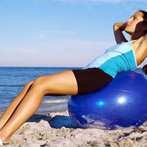
Tired of countless sets and reps? Make "one and done" your workout mantra. With this get-lean routine you'll do each move only once, which will leave you twice as much time to enjoy your sleek new physique!

Slow down to firm up. You can tone all over with a single rep. The key? Stretch out each exercise over a full 90 seconds. "Stop-and-hold training is more effective than traditional strength training because it maximizes muscle tension throughout the total range of motion," says Pete Cerqua, author of The 90-Second Fitness Solution (Atria Books), who created these slow-mo moves exclusively for SELF.

You'll need A pair of 5- to 10-pound weights and a stability ball

You'll do One rep (or one on each side) of each sculptor twice a week on nonconsecutive days. Go with the slow!

Busted! 5 Major Eating Mistakes

By Holly McCord, RD, with Gloria McVeigh, Prevention
Ever get the guilty feeling that you're being watched as you toss the double fudge brownie mix into your grocery cart? Well, you are! We checked with some of the top US nutrition experts, who admitted they secretly spy on the rest of us as we make real-world choices in restaurants and grocery stores. Here are their top five gripes.

1. We can't tell the good fats from the bad ones.
"Most people still don't get that some fats are actually good for you," says Alice Lichtenstein, DSc, an American Heart Association spokesperson. "You want to avoid saturated and trans fats, but you need more monounsaturated and polyunsaturated fats. Good sources are fish, nuts, avocados, and soybean and canola oils."

Smarter: Fit in good fats. "If you keep track of total calories, you don't have to worry about how much fat you eat, just what kind," explains Dr. Lichtenstein. Grandpa Po's Slightly Spicy Nutra Nuts use only canola oil (160 cal, 10 g fat, 1 g sat. fat, 2 g fiber, 60 mg sodium); at healthy food supermarkets.

2. We supersize to save money.
"People think that supersizing a restaurant meal is a money saver, but it's not a health bargain if it has way too many calories," says Karen Weber Cullen, DPH, RD, research nutritionist at Baylor College of Medicine in Houston.

Smarter: Judge with your palm, not your purse. A serving size is about what fits into the palm of your hand (larger for men than women, smaller for children). For most meals, pick one protein, one starch, one veggie, and one fruit based on the serving that will fit into your palm.

3. We think anything liquid has no calories.
"What freaks me out is the amount of sugared soda and juice we drink," says Judith Stern, ScD, RD, professor of nutrition and internal medicine at the University of California, Davis. "I'd like to see all the sugared drinks sent out into space, where they could orbit the Earth forever." Sugared drinks balloon your calorie intake and squeeze out more nutritious foods.

Smarter: Try a cup of tea. Available in myriad varieties, the calorie-free brew promotes heart health, staves off several types of cancer, strengthens bones and teeth, and protects the skin.

4. We don't know how "hungry" really feels.
"If you don't know when you're hungry, you don't know when you're full, so you won't know when to stop eating," says Elisabetta Politi, RD, nutrition manager of the Duke University Diet & Fitness Center in Durham, NC.

Smarter: Tune in with mindful eating. Here's how.
1. Before you eat, relax, and rate your hunger from 1 (hungriest) to 7 (fullest).
2. Eat slowly, pausing often to rate how your hunger changes.
3. When finished, rate yourself one more time. Try to stay between 2 1/2 and 5 1/2: not too ravenous when you start and not completely full when you stop.

5. We have a microwave addiction.
Many women come home from work and pop a frozen entrée into the microwave. "Eating too many heavily processed foods can leave you short on fiber and antioxidants such as vitamin C," explains Jo Ann Hattner, RD, clinical dietitian at Stanford University Medical Center.

Smarter: Complement a frozen entrée with a green salad, a 100 percent whole wheat roll, and fruit for dessert. Stock up on the freshest fruit for maximum flavor.

Sunday, January 24, 2010

Instant Ab Flatteners

Achieving a toned, sexy tummy might seem like a pipe dream this time of year. Baggy sweaters abound, egg nog is served and Frosty the Snowman doesn't offer much in the way of flat-belly inspiration. But getting a sleek, sexy stomach is easier than you think. Spend just five minutes a day on toning your abs and you'll get an amazing middle.

We rounded up five of the most effective tummy toners around. Work three or four of these exercises into your routine (easing them in will minimize soreness). Do the number of reps indicated, resting one minute between moves. The only equipment you will need is a hand towel. Washboard abs, here you come!

Pike 90
Lie faceup; raise legs until perpendicular to floor, feet flexed. Lower right leg so it hovers 1 or 2 inches off floor and place hands lightly behind head. In this position, do 15 crunches, lifting chest toward ceiling and lowering. Switch legs and repeat.

Crunchy frog
Sit with knees bent, feet flat. Keeping legs together, raise feet several inches and bring knees toward chest. Wrap arms around knees without touching legs. Extend legs and stretch arms to sides, palms forward. Return to wrapped-arm position; repeat. Do 15 reps.

Tornado
Stand with feet hip-width apart, right leg in front of left, right foot turned out. Bend elbows and raise arms out to sides at shoulder level (like goalposts). In one motion, raise right knee to lowered right elbow. Return to start; switch sides and repeat to complete one rep. Do 15 reps.

Corkscrew
Lie faceup. Press legs together and raise them toward ceiling until they're at a 90-degree angle, with knees slightly bent and toes pointed. Raise butt and legs off floor using ab muscles; twist legs slightly to left. Repeat, twisting to right, for one rep. Do 15 reps.

Side arm balance
Start on floor on knees. Lean to left and place left hand on floor under shoulder; extend right arm up and to left, palm down. Straighten right legs out to right with foot on floor, resting on left knee. Hold for 5 breaths. Return to start; switch sides. Repeat twice per side.

By Lucy Danziger, SELF Editor-in-Chief

Stop Snoring

For most people, snoring is not a major problem, and most people snore at least occasionally. Men and overweight people are more likely to snore and snore more often. The frequency and intensity of snoring will likely increase with age if not dealt with at an earlier stage.

Mild snoring might seem harmless, but it can actually lead to more serious health problems, including sleep deprivation. Persistent snoring has also been linked to problems in cardiovascular health, type II diabetes, hypertension and metabolic syndrome.

Snoring is caused when there is a narrowed passageway between the nose and the throat. The passageway narrows because the muscles in your throat are more relaxed when you sleep. When inhaling oxygen while the passageway is narrowed, air will have to move faster than before, and will hit the tissues of the soft palate and the uvula with more force causing vibrations which in turn create snoring sounds.

Causes of Snoring
There can be many causes to why one snores when they sleep, anything that causes the air passageways to narrow will likely cause snoring.
  • Substances that promotes muscle relaxation such as alcohol or drugs that promote drowsiness will cause your throat muscles to relax thus narrowing the air passageway and also causes the tongue to relax and fall back limit the air passageway thus encouraging snoring.
  • Snoring can be brought on by a stuffy nose which can be brought on by a cold or sinuses. When one's nose becomes stuffy, less air can go through the nasal passage so the throat has to pull air in through the mouth with extra force, which will in turn cause snoring.
  • The physical makeup of your body can be a cause of one's snoring problems; if one is overweight there will be more fatty tissues in the throat which means a narrower air passageway. Also if one has a long uvula and/or soft palate will also cause a narrower air passage and an increased likelihood of snoring. Other physical characteristics which may bring about snoring include large adenoids and large tonsils, a long tongue, a small lower jaw or a deviated nasal septum.
  • Asthma and/or smoking can also increase the chance of one snoring due to the irritation and constriction of the air passageways which is brought about.
  • Sleeping on your back makes one more likely to snore because gravity pulls the tongue and jaw down to the back of the mouth and limits the air passageway.
Before resorting to drastic measures (or being booted from the bedroom), try the natural ingredients in SnoreZip Homeopathic Spray for gentle, effective relief of the symptoms that may be causing you to snore. So you and your partner can get the benefits that come with getting better quality sleep.
Click Banner for more information

Wednesday, January 20, 2010

Best Anti-Aging Foods

These six food groups hold the "power" to help you lose weight and turn back the clock. Don't miss our easy seven-day meal plan and delicious anti-aging snacks!

1. Produce
Piling your plate with fruits and vegetables is a no-brainer when it comes to weight loss — they're low in calories, high in nutrients, and filling — but the latest studies show that certain ones can provide surprising anti-aging benefits.

There's buzz about blueberries, for instance, for their memory-boosting potential. But berries of all hues are antioxidant-rich, reports Navindra P. Seeram, Ph.D., assistant professor at the University of Rhode Island College of Pharmacy in Kingston. That means they combat free radicals, molecules that can cause widespread cell damage and are linked to chronic inflammation. Unlike the inflammation that occurs when you sprain an ankle or strain a muscle, the type that contributes to aging is persistent, and thought to be at the root of most chronic diseases, from cancer, heart disease, and diabetes to Alzheimer's, arthritis, and osteoporosis. Berries' beauty bonus: They're chock-full of vitamin C, another potent antioxidant that may help keep your complexion looking smooth by fighting those pesky (skin-damaging) free radicals.

To keep your vision sharp, set your sights on spinach and other dark leafy greens. These veggies are prime sources of lutein and zeaxanthin, plant pigments that protect your eyes from the harmful effects of ultraviolet light. Leafy greens are also rich in vitamin K, a nutrient that plays a role in reducing bone loss and preventing fractures.

2. Protein
This key dietary component becomes even more critical starting in the 40s, when muscle mass begins to decline by up to 1 percent a year. That drop slows metabolism, which makes the pounds pile on more easily. The double whammy consequence: Added weight puts your health at risk, and down the road, diminished muscle mass can throw off your balance (upping chances of a fall), sap your strength, and even threaten your ability to recover from an illness or accident.

To hang on to your metabolism-boosting muscle — and keep you feeling full after meals (another protein plus) — experts recommend eating plenty of skinless chicken and turkey breast, lean beef and pork, eggs, beans, and seafood. And don't forget protein-rich dairy: Minerals (primarily calcium, phosphorus, and potassium) in fat-free milk and yogurt as well as low-fat cheeses help to keep blood pressure healthy, pudge in check, and bones strong. News flash: Calcium can't build bone if you're not getting enough protein, and current recommendations — about five ounces a day for a 145-pound woman — are too low, says Robert P. Heaney, M.D., professor of medicine at Creighton University in Omaha. Our Anti-Aging Meal Plan provides about 11 ounces of protein daily.

Another reason to spoon up some yogurt: Eating at least 1/4 cup every day led to a 60 percent lower risk of gum disease and a 50 percent lower risk of tooth loss in a Japanese study published in the Journal of Periodontology. The effect is thought to be linked to the probiotics in yogurt, but not in most other dairy.

3. Omega-3-Rich Fish
Fatty acids in seafood help quench the flames of chronic inflammation. In addition, "there's very good new data suggesting that omega-3 fats from fish act on an area of the brain that leads to improved mood and attitude among healthy people," says Artemis P. Simopoulos, M.D., author of The Omega Diet. These improvements in outlook lead to feeling healthier and more vigorous, she explains. The omega-3s in fatty fish like salmon and tuna have the most potent anti-inflammatory effects. But it's smart to consume omega-3s from plant sources, like walnuts and flaxseed, too — especially if you're not fond of fish.

4. Whole Grains
A 2008 review of these diet-friendly foods — which include whole wheat, oats, and brown rice, and the bread, cereal, and other edibles made from them — concluded that a meal plan loaded with whole grains helps you stay slim, thanks, in part, to fiber's role in appetite control. Their low rankings on the glycemic index (a system that rates the effect of different carbohydrates on blood sugar levels) may also play a role.

A raft of research has also shown that whole grains offer protection against diabetes, heart disease, stroke, colon cancer, high blood pressure, and gum disease. These benefits are tied to the array of vitamins, minerals, plant chemicals, and again, fiber that work together to promote health. (That's why refined grains, which filter out these nutrients during manufacturing, and add some back later in the process, don't offer the same advantages.)

5. Exercise
It's an anti-aging bonanza: Being active maintains muscle mass, boosts metabolism, and keeps your heart and lungs primed, among other benefits. Now, a recent study has found that running, in particular, promotes a long, independent life. Researchers at Stanford University School of Medicine followed a group of runners and non-runners for 21 years and found that elderly runners put off age-related disabilities for 16 years beyond their non-running counterparts. Runners also lived longer: 19 years into the study, only 15 percent of them had died compared with 34 percent of the non-runners. And the active ones were less likely to die from heart disease, stroke, cancer, and neurological conditions. While this study examined running, 30 minutes of more moderate aerobic activity, five days a week, will keep you healthy, according to recently released guidelines from the American Heart Association and American College of Sports Medicine. What should also be on your fitness agenda: strength training twice a week to maintain muscle and keep your metabolism humming.

6. Red Wine and Other Drinks
What other diet recommends red wine? Ours does because the ruby beverage's Resveratrol is a potent antioxidant, inflammation damper, and artery protector. Plus, animal research suggests that high amounts of Resveratrol may counteract cell death in the heart and brain, which could mean this compound has even greater potential to prolong your life. Limit yourself to one five-ounce glass a day; more could be harmful.

If you're not a wine drinker, no worries: Put on the coffeemaker or the kettle instead. Coffee appears to lower the risk of type 2 diabetes and Parkinson's disease, and evidence suggests that java drinkers have a lower chance of dying from heart disease. Some of the benefit may come from caffeine, but coffee also contains chlorogenic acids, antioxidants that might also play a protective role. Drinking tea may lower your risk of heart attacks, strengthen your immune system, protect tooth enamel, and help fight memory loss associated with aging. Choose green, black, white, or oolong — their leaves all come from the camellia sinensis, or tea plant. And their polyphenols (antioxidants), fluoride, and caffeine — which are thought to contribute to these health benefits — are largely missing from herbal brews.

Two Secret Age-Defying Treats
They seem like diet no-no's because of their calorie load, but dark chocolate and a handful (not a canful) of nuts have longevity and weight-loss benefits.

This just in: Nuts give you a surprising diet edge. A recent study found that despite being a high-fat, high-cal food, they don't promote weight gain. The reason: People find nuts filling and after eating them, offset some of the calories by eating less later on. Best of all, up to 20 percent of the calories in nuts don't get absorbed.

Craving something sweet? Dip into dark chocolate. The latest evidence suggests that cocoa flavanols (more predominant in dark chocolate than milky versions) may lower inflammation, keep blood pressure in check, prevent platelets from clotting (which could, in turn, prevent strokes and heart attacks), and boost brain power.

Anti-Aging Healthy Snacks
Our Anti-Aging Meal Plan provides everything you need to look younger and get thinner. We've even made room for extras — like a splash of milk in your coffee or honey in your tea. Every day, you can have up to 50 "free" calories to use any way you'd like. (Or save up for two or three days so you can have a 100-calorie or 150-calorie treat.) You can choose an item that's already on the menu (say, extra crackers or another egg) to have seconds, or select a different food or drink that you want to splurge on (our lists can help you keep a calorie tally).

Up to 50 Calories:
1 tbsp 2% milk - 8 calories
1 tsp sugar - 16 calories
1 tsp honey - 21 calories
1 tbsp grated Parmesan cheese - 22 calories
1 tbsp reduced-fat sour cream - 26 calories
3 slices (1 oz) deli thin lean ham - 30 calories
2 tbsp Cedar's Cucumber Garlic Tzatziki with 5 celery stalks - 35 calories
2 Ak-Mak crackers - 46 calories
1 Sargento Reduced Fat Colby-Jack cheese stick - 50 calories
1 Mini Babybel Light cheese - 50 calories

Up to 100 Calories:
1 hard-boiled egg - 70 calories
1 6-ounce container of Dannon Light & Fit yogurt (any flavor) - 80 calories
1 Nature's Path Organic Pomegran Plus Waffle - 80 calories
2 Blue Horizon Organic Chinese-Style Shrimp Spring Rolls - 87 calories
1 small banana - 90 calories
1 Tall Skinny Latte from Starbucks - 90 calories
Any 100-calorie snack pack - 100 calories
1 Whole Treat Organic Fudge Bar - 100 calories
5 Triscuits - 100 calories
3 Hershey's Bliss Signatures in dark chocolate - 100 calories

Up to 150 Calories:
1/2 cup Edy's Slow Churned Rich & Creamy Chocolate Ice Cream - 110 calories
1 Kashi Chewy Cherry Dark Chocolate Bar - 120 calories
1 5.3-ounce container FAGE Total 2% Yogurt with Fruit (any flavor) - 130 calories
1 Pack World of Grains Cookies - 130 calories
1 Kozy Shack Original Rice Pudding - 130 calories
1 Bumble Bee Sensations Easy Peel Bowls Sundried Tomato & Basil - 130 calories
1 Tin Sweet Riot Cocoa Nibs - 140 calories
1 Kahiki Naturals Chicken Egg Roll - 140 calories
21 almonds - 150 calories
14 baby carrots with 1 packet Wholly Guacamole 100 Calorie Snack Packs - 150 calories

By Samantha B. Cassetty, M.S., R.D. and Delia Hammock, M.S., R.D

 
Design by Free Wordpress Themes | Bloggerized by Lasantha - Premium Blogger Templates